Are you looking to expand your culinary horizons and transform your induction cooktop into a versatile flat-top cooking station? Adding a griddle to your induction setup can unlock a world of delicious possibilities, from perfectly seared steaks to fluffy stacks of pancakes. However, choosing the right griddle for your induction cooktop requires understanding specific compatibility and performance factors. This comprehensive guide will walk you through everything you need to know, ensuring you select the best griddle to complement your modern kitchen.
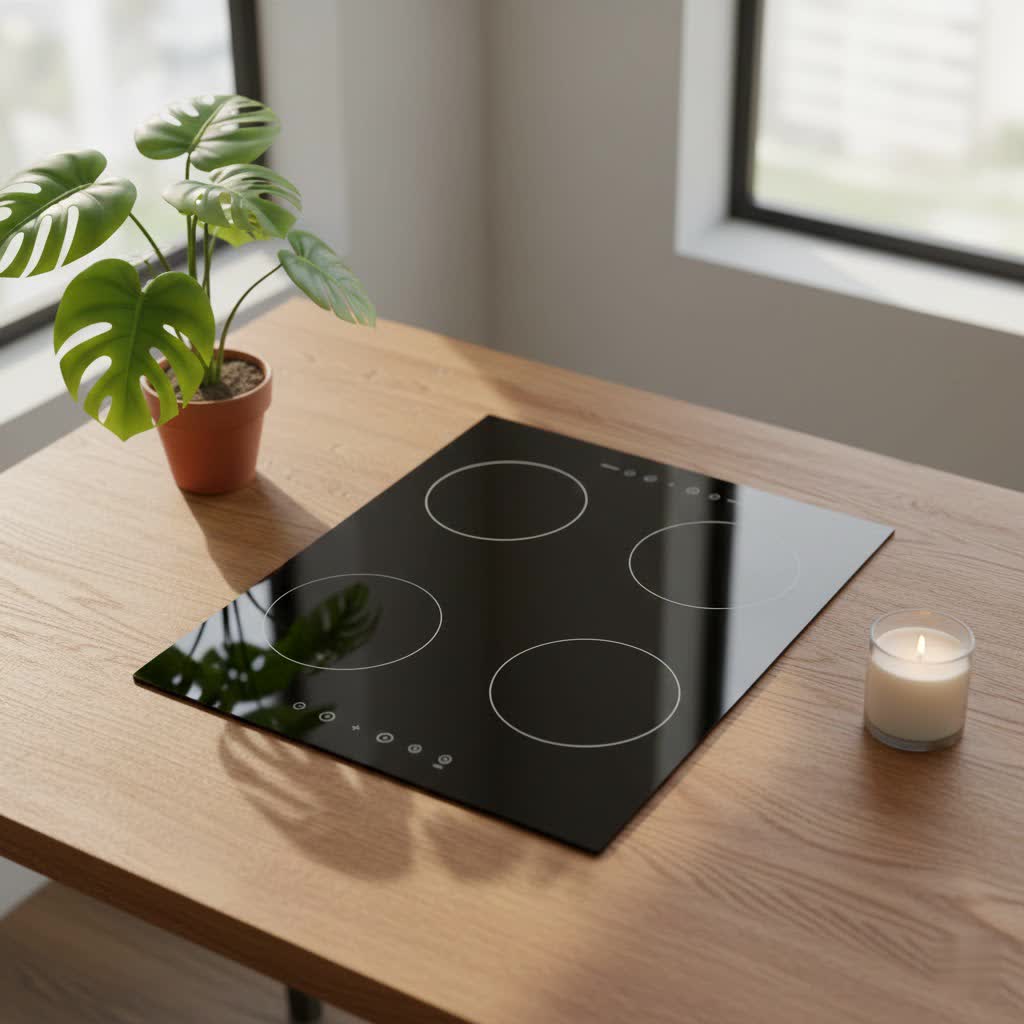
What is an Induction Griddle and How Does It Work?
An induction griddle is a flat cooking surface specifically designed to work with induction cooktops. Unlike traditional gas or electric stoves that heat cookware indirectly, induction technology uses electromagnetic energy to generate heat directly within the pan itself. When you place an induction-compatible griddle on your cooktop, a magnetic field is created between the griddle’s base and the cooktop’s coils, causing the griddle to heat up rapidly and efficiently. This direct heating method provides precise temperature control and uniform cooking.
For a griddle to function effectively on an induction cooktop, it must possess a ferromagnetic base—meaning it needs to contain magnetic materials such as cast iron, carbon steel, or a multi-ply stainless steel construction with a magnetic layer. Furthermore, the griddle must sit completely flush with the cooktop surface to ensure optimal magnetic contact and even heat transfer. Some advanced induction cooktops feature “bridge elements” or “Even-Heat Zones” specifically designed to accommodate larger, double-burner griddles, providing consistent heat across an extended surface area.
Advantages and Disadvantages of Induction Griddles
Induction griddles offer a host of benefits that can significantly enhance your cooking experience, but they also come with certain considerations.
Advantages:
- High Energy Efficiency: Induction cooking directly heats the griddle, minimizing heat loss to the surroundings and resulting in faster cooking times and lower energy consumption.
- Enhanced Safety: Without an open flame or radiant heat from the cooktop surface, induction griddles are generally safer. The cooktop remains relatively cool, reducing the risk of accidental burns.
- Effortless Cleaning: Since the induction surface itself doesn’t get hot, spills and splatters are less likely to bake on, making cleanup of the cooktop easier. Many griddles also feature non-stick coatings for quick wipe-downs.
- Precise Temperature Control: Induction technology allows for instantaneous and accurate temperature adjustments, offering superior control for delicate tasks like making crêpes or searing at high heat.
- Rapid Cooking Speed: The direct heat transfer means griddles heat up quickly, cutting down on preheating times and speeding up meal preparation.
- Versatility in Cooking: An induction griddle transforms your stovetop into a broad, flat surface perfect for cooking large breakfasts, grilling sandwiches, searing meats, and making various flatbreads.
|
Our Picks for the Best Induction Cooktop in 2026
As an Amazon Associate I earn from qualifying purchases.
|
||
| Num | Product | Action |
|---|---|---|
| 1 | Duxtop Portable Induction Cooktop Burner, Induction Hot Plate with LCD Sensor Touch 1800 Watts, Silver 9600LS/BT-200DZ |

|
| 2 | ChangBERT Portable Induction Cooktop Enhanced Version, One-Click Max Power 1800W Large Heating Coil Burner, Precise Temperature Control, NSF Certified, Low Noise Hot Plate for Home & Commercial |
|
| 3 | 30 Inch Gas Cooktop, TOPWISH Gas Stove Top with 5 High Efficiency SABAF Burners, 41400 BTU, NG/LPG Convertible 304 Stainless Steel Built-in Propane Stovetop with Thermocouple Protection, 120V AC |
|
| 4 | Nuwave Flex Precision Induction Cooktop, 10.25” Shatter-Proof Ceramic Glass, 6.5” Heating Coil, 45 Temps from 100°F to 500°F, 3 Wattage Settings 600, 900 & 1300 Watts, Black |
|
| 5 | Duxtop 1800W Portable Induction Cooktop Countertop Burner, Black 9100MC/BT-M20B |
|
| 6 | VoltCuisine 24 Inch Double Induction Cooktop, Button Control, 1800W Power Sharing, Low Power Continuous Heating, Portable Countertop Electric Cooker |
|
| 7 | ChangBERT Induction Cooktop, Commercial Grade Portable Cooker, Large 8” Heating Coil, Premium Stainless Steel Countertop Burner with NSF Certified, 10 Hours Timer Powerful 1800W Professional Hot Plate |
|
| 8 | Nuwave Pro Chef Induction Cooktop, NSF-Certified, Commercial-Grade, Portable, Powerful 1800W, Large 8” Heating Coil, 94 Temp Settings 100°F - 575°F in 5°F, Shatter-Proof Ceramic Glass Surface |
|
| 9 | Cooktron 2-in-1 Induction Cooktop with Grill Pan – Portable 1 Burner Induction Hot Plate 1800W, Removable Griddle, 10 Power & 5 Temp Levels, Touch & Knob Control for Kitchen or RV Camping |
|
| 10 | Duxtop 1800W Portable Induction Cooktop Countertop Burner, Gold 8100MC/BT-180G3 |
|
Disadvantages:
- Higher Initial Cost: Induction-compatible griddles, especially those made from premium materials or with advanced non-stick coatings, can be more expensive than conventional griddles.
- Cookware Compatibility: Only griddles with a ferromagnetic base will work on induction cooktops. This limits material choices compared to gas or electric stoves. A simple magnet test can confirm compatibility.
- Potential for Uneven Heating (without bridge feature): While induction offers excellent heat distribution within the activated zones, larger double-burner griddles may experience slight temperature variations in the center if your induction cooktop lacks a “bridge” function to combine two burners.
- Requires Stable Power Source: Induction cooktops, and by extension, induction griddles, need a stable and sufficient electrical supply for optimal performance.
- Maintenance for Specific Materials: Cast iron and carbon steel griddles require seasoning and specific cleaning routines to maintain their non-stick properties and prevent rust.
Popular Types of Griddles for Induction Cooktops
The market offers various types of griddles, primarily distinguished by their materials, each with unique properties suitable for induction.
- Carbon Steel Griddles:
- Description: Carbon steel is a hybrid between cast iron and stainless steel, offering excellent heat responsiveness and retention. It can be seasoned to create a natural non-stick surface.
- Induction Compatibility: Highly compatible due to its ferromagnetic properties.
- Benefits: Lightweight compared to cast iron, heats up quickly, provides even heat distribution, and is highly durable. Ideal for searing and achieving a perfect crust.
- Maintenance: Requires seasoning and handwashing to prevent rust.
- Cast Iron Griddles (Seasoned & Enameled):
- Description: Cast iron is renowned for its superior heat retention and ability to reach very high temperatures.
- Induction Compatibility: Excellent due to its high ferrous content. However, some reversible grill/griddles may not sit flat enough to activate induction elements effectively.
- Benefits: Incredibly durable, provides excellent searing capabilities, and maintains consistent heat for prolonged cooking. Enameled cast iron offers the benefits of cast iron without the need for seasoning, and is often easier to clean.
- Maintenance: Bare cast iron requires regular seasoning and handwashing. Enameled cast iron is generally easier to care for and often dishwasher-safe.
- Non-stick Griddles (with Induction-Compatible Base):
- Description: These griddles feature a non-stick coating (such as ceramic or PTFE-based) over a core material like aluminum or hard-anodized aluminum, which is then bonded with a ferromagnetic stainless steel or tri-ply base for induction compatibility.
- Induction Compatibility: Compatible if they have a magnetic base.
- Benefits: Very easy food release and cleanup. Lighter weight than cast iron.
- Maintenance: Requires careful handling to avoid scratching the non-stick coating. Handwashing is often recommended to prolong the coating’s lifespan, even if advertised as dishwasher-safe.
Comparing Griddles with Other Cookware Types
To highlight the unique advantages of induction griddles, let’s compare them with other common cooking surfaces.
| Feature | Induction Griddle | Gas Burner with Frying Pan | Electric Burner with Frying Pan | Electric Griddle (Standalone) |
|---|---|---|---|---|
| Heat Source | Electromagnetic field heats pan directly | Open flame heats pan indirectly | Electric coil/element heats pan indirectly | Integrated electric heating element |
| Energy Efficiency | High (direct heat transfer) | Medium (heat loss to air) | Low (significant heat loss) | Medium to High (depends on model) |
| Safety | High (cool cooktop, no flame) | Medium (open flame, hot grates) | Medium (hot surface, slow cool-down) | Medium (hot surface, often with indicator lights) |
| Cooking Speed | Fast (rapid heating and response) | Medium | Slow | Fast (often quicker than electric stovetops) |
| Temperature Control | Very precise and instant | Good, but less precise than induction | Fair, slow response to changes | Varies by model, often precise |
| Surface Area | Large, often double-burner designs | Limited to single pan size | Limited to single pan size | Large, dedicated flat top |
| Portability | Stovetop models are portable (pan only) | Stove-bound | Stove-bound | Portable (requires outlet) |
| Maintenance | Varies by material (seasoning or non-stick care) | Standard pan cleaning | Standard pan cleaning | Often easier with removable, dishwasher-safe plates |
| Kitchen Space | Minimal additional space (sits on cooktop) | No extra space | No extra space | Requires dedicated counter/storage space |
Essential Criteria for Choosing an Induction Griddle
Selecting the perfect induction griddle involves considering several key factors to match your cooking style and kitchen setup.
- Material:
- Carbon Steel: Offers excellent heat distribution and retention, lightweight, and develops a natural non-stick surface with seasoning. Great for searing.
- Cast Iron (Seasoned or Enameled): Unbeatable for heat retention and achieving a deep sear. Enameled versions are easier to clean and maintain, while seasoned cast iron requires specific care.
- Non-stick (with Induction Base): Ideal for easy food release and minimal cleanup. Look for durable coatings and a heavy-gauge magnetic base for even heating.
- Size and Design:
- Single-Burner: Compact, suitable for smaller households or limited space. Typically 9.5 to 12 inches square or round.
- Double-Burner: Covers two induction zones, providing ample cooking space for larger meals or multiple items simultaneously. Measure your cooktop to ensure a good fit, especially if your hob doesn’t have a bridge function.
- Reversible Grill/Griddle: Offers a flat griddle surface on one side and a ribbed grill surface on the other for added versatility. Ensure the griddle side sits perfectly flat on your induction cooktop for proper heating.
- Heat Distribution and Evenness: Look for griddles with thick, heavy bases that promise uniform heating across the entire surface. Carbon steel and well-constructed cast iron generally excel here. For non-stick options, a heavy-gauge aluminum or stainless-clad base is crucial.
- Non-stick Properties: Decide if you prefer a naturally non-stick seasoned surface (carbon steel, cast iron) or a coated non-stick surface. Coated surfaces offer immediate non-stick benefits but require careful handling to prevent damage.
- Handles: Consider ergonomic, heat-resistant handles for safe and easy transport, especially for heavy double-burner griddles. Raised, hand-welded handles are a plus.
- Oven Safety: If you plan to finish dishes in the oven or keep food warm, check the griddle’s maximum oven-safe temperature.
- Additional Features: Some griddles include sloped sides or drip trays to manage grease, or even press accessories for burgers and sandwiches.
- Brand Reputation and Reliability: Choose reputable brands known for quality cookware.
- Price and Warranty: Griddles for induction vary widely in price. Consider your budget and look for products with a good warranty for peace of mind.
Top Brands for Induction Griddles
Several brands offer high-quality griddles compatible with induction cooktops, each with its unique strengths:
- Lodge: Famous for its durable and affordable seasoned cast iron. Their reversible grill/griddle is popular, though some models may have uneven induction activation if not perfectly flat.
- Cuisinart: Offers a range of induction-compatible options, including stainless steel non-stick double griddles, known for their large cooking surfaces and versatility.
- Caraway: Known for its ceramic-coated non-stick cookware, including double-burner griddles that are aesthetically pleasing and offer even heating and easy cleanup.
- Made In: Specializes in professional-grade cookware, with their carbon steel griddles being a top choice for excellent heat control, even distribution, and natural non-stick properties when seasoned.
- Le Creuset: Renowned for its premium enameled cast iron, offering elegant and highly durable single-burner griddles that are easy to maintain and provide superb heat retention.
- Staub: Another high-end brand for enameled cast iron, similar to Le Creuset, offering excellent quality and heat performance.
- GreenPan: Features ceramic non-stick griddles with induction-compatible bases, focusing on healthy, PFAS-free cooking surfaces.
- KitchenAid: Provides hard-anodized induction griddles, often designed for even heat and durability.
Guide to Using and Maintaining Your Induction Griddle
Proper use and maintenance will ensure your induction griddle performs optimally and lasts for years.
How to Use Your Induction Griddle Safely and Effectively:
- Initial Cleaning: Before first use, gently wash your griddle with warm, soapy water and a soft sponge. Rinse thoroughly and dry completely.
- Preheating: Place your griddle on the induction cooking zone. For best results, preheat the griddle gradually over medium heat. If your griddle is lightly greased, use a high heat setting to warm it up, then adjust to your desired temperature. Avoid preheating an empty griddle on the highest power setting (level 9 or boost) for extended periods, as it can quickly reach very high temperatures (up to 300°C/572°F) and potentially damage the non-stick coating or burn residual oils.
- Oil Application: For grilling with oil, apply a small quantity of suitable fat or vegetable oil directly to your food, rather than pouring a large amount onto the griddle, to prevent burning and residue buildup. Use hardened vegetable fat or vegetable oil for high-heat cooking; avoid butter, margarine, cold-pressed, or salad oils as they can burn quickly.
- Cooking: Distribute your food evenly on the heated griddle and adjust the heat as needed. Induction’s quick response allows for precise temperature management.
- Moving the Griddle: Always lift the griddle completely when moving it to avoid scratching or scuffing your induction cooktop surface.
- Handle Care: Griddle handles, especially on cast iron and carbon steel models, can become very hot during cooking. Always use oven mitts or heat-resistant gloves.
How to Clean and Maintain Your Induction Griddle:
- Cool Down: Allow the griddle to cool down completely after use before attempting to clean it. Cleaning a hot griddle with cold water can cause thermal shock, potentially leading to warping or damage.
- Handwashing is Best: For most induction griddles, especially carbon steel, cast iron, and non-stick coated models, handwashing is highly recommended. Use hot water, a mild dish soap, and a non-abrasive sponge or dishcloth. A washing-up brush can be effective for cleaning griddle grooves.
- Avoid Harsh Cleaners: Never use metallic sponges, abrasive scouring pads, bleach, or harsh chemical cleaners, as these can damage non-stick coatings and seasoned surfaces.
- Dishwasher Use (Use with Caution): While some enameled cast iron or certain non-stick griddles may be advertised as dishwasher-safe, prolonged exposure to harsh dishwasher detergents, salts, and high temperatures can degrade coatings, dull finishes, and even lead to oxidation (bright spots) or discoloration. If you do machine wash, consider applying a thin layer of cooking oil afterwards, particularly for non-stick surfaces, to help prevent the coating from drying out.
- Drying: Always dry your griddle thoroughly immediately after washing to prevent rust, especially for bare cast iron and carbon steel.
- Seasoning: For carbon steel and seasoned cast iron griddles, re-season periodically or when the surface starts to lose its non-stick properties.
- Addressing Stains: Heavily seasoned or marinated foods can sometimes cause discoloration or stains on the griddle surface. These usually do not affect food safety or grilling performance.
Comparison Table of Best Induction Griddle Models (2026)
| Model | Brand | Material | Power / Size | Key Features | Price (Approx.) |
|---|---|---|---|---|---|
| Nonstick Stainless Steel Double Griddle | Cuisinart | Tri-ply Stainless Steel with Nonstick Coating | 10.75″ x 21″ (double burner) | Large surface, oven-safe (500°F), loop handles | $80 |
| Double Burner Griddle | Caraway | Aluminum, Stainless Steel, Ceramic Coating | Double burner | Even heating, easy clean, aesthetic colors, oven-safe (550°F) | $175 |
| Carbon Steel Griddle | Made In | 4mm Pro-Grade Carbon Steel | 24″ x 10.5″ (double burner) | Excellent responsiveness, raised handles, naturally non-stick (seasoned), oven-safe (1200°F) | $179 |
| 9.5-inch Cast Iron Square Griddle | Le Creuset | Enameled Cast Iron | 9.5″ x 9.5″ (single burner) | Superior heat retention, durable enamel, dishwasher-safe, oven-safe (450+°F) | $175 |
| Reversible Grill/Griddle | Lodge | Seasoned Cast Iron | 20″ x 10.5″ (double burner) | Reversible (griddle/grill), very durable, requires seasoning, may have induction compatibility issues if not fully flat | $41 |
Conclusion
An induction griddle is a transformative addition to any modern kitchen, offering unparalleled versatility, precise control, and efficient cooking. By understanding the specific requirements for induction compatibility—primarily ferromagnetic materials and a flat contact surface—you can confidently choose a griddle that will serve your culinary ambitions for years to come. Whether you opt for the robust heat retention of cast iron, the responsive searing of carbon steel, or the effortless cleanup of a high-quality non-stick option, the right induction griddle can unlock a new world of cooking possibilities.
Ready to cook up a storm? Which induction griddle feature excites you the most for your next meal?
Frequently Asked Questions
What kind of griddle works on an induction cooktop?
An induction cooktop requires griddles made from ferromagnetic materials like cast iron, carbon steel, or stainless steel with a magnetic base. You can test compatibility by holding a magnet to the bottom of the griddle; if it sticks, it’s induction-ready.
Can I use a regular griddle on an induction cooktop?
Only if it’s induction-compatible. Many “regular” griddles, especially older aluminum ones without a magnetic base or those with a warped bottom that doesn’t sit flush, will not work on an induction cooktop. Always check for the induction symbol or perform the magnet test.
How do I ensure even heating with a double-burner griddle on induction?
For optimal even heating with a double-burner griddle, look for an induction cooktop with a “bridge function” or “Even-Heat Zone” that links two burners. If your cooktop lacks this, choose a griddle made from a material like carbon steel or well-constructed cast iron, known for excellent heat distribution, and preheat gradually to allow temperatures to equalize.
Is it safe to use cast iron griddles on induction cooktops?
Yes, cast iron is generally safe and highly effective on induction cooktops due to its ferromagnetic properties. However, ensure the cast iron griddle has a smooth, flat bottom to maximize contact with the cooktop surface and avoid scratches. Always lift, rather than slide, heavy cast iron to prevent damage.
How do I clean a seasoned carbon steel or cast iron induction griddle?
After each use, allow the griddle to cool completely. Scrape off any food residue with a spatula, then handwash with hot water and a mild dish soap (optional for seasoned surfaces). Avoid abrasive scrubbers. Dry immediately and thoroughly to prevent rust, then apply a thin layer of cooking oil to re-season and protect the surface.
