Are you navigating the complexities of modern kitchen appliances, seeking a cooking solution that blends efficiency, safety, and flexibility? Portable Induction Cooktops are transforming culinary spaces, from compact city apartments to adventurous RVs, offering a powerful yet convenient way to cook. If you’ve ever dreamt of rapid boiling, precise temperature control, and easy cleanup, then diving into the world of portable induction might just be your next culinary revelation. This comprehensive guide will equip you with all the essential knowledge to choose and master the perfect portable induction cooktop for your lifestyle, ensuring every meal is a delight.
What is a Portable Induction Cooktop?
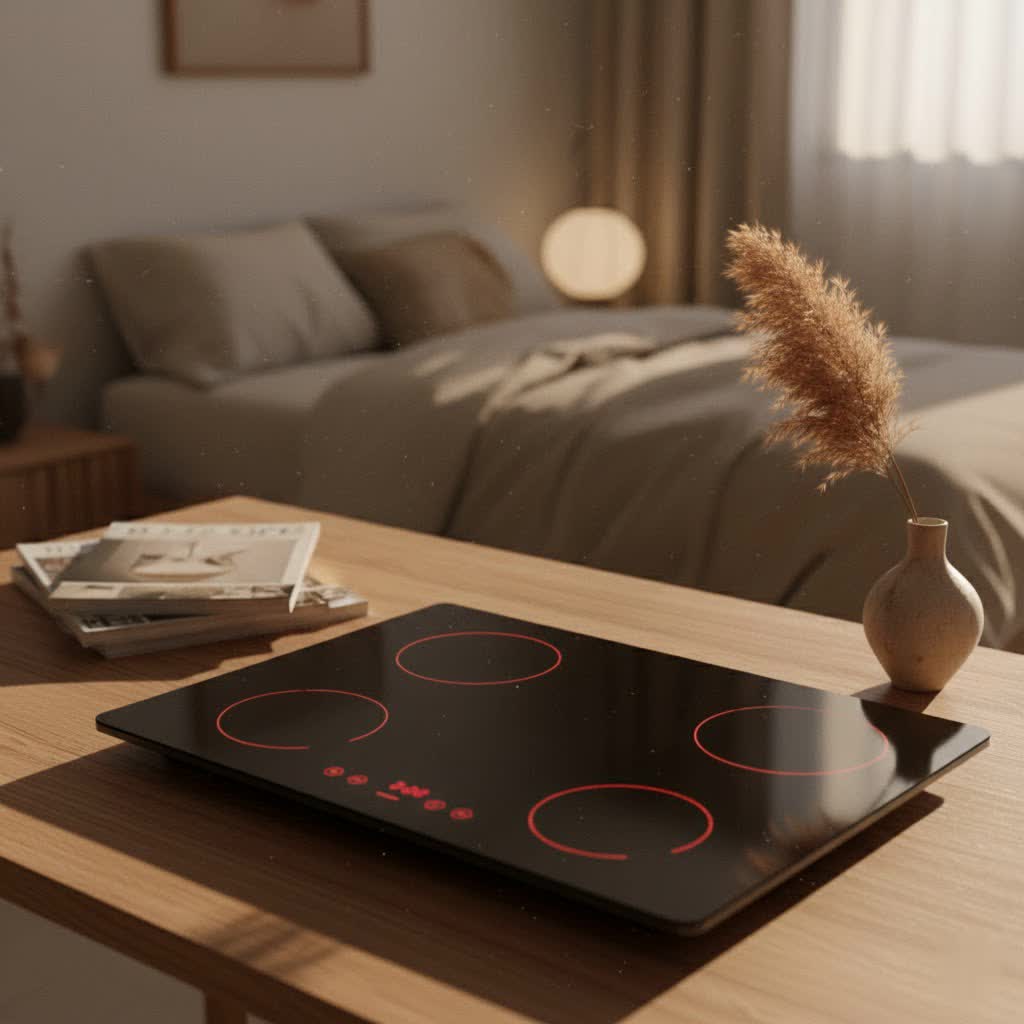
A portable induction cooktop is a compact, countertop cooking appliance that utilizes electromagnetic energy to directly heat compatible cookware. Unlike traditional gas or electric stoves, which heat elements or flames that then transfer heat to the pot or pan, an induction cooktop generates heat within the cookware itself. This revolutionary method ensures minimal energy waste and significantly faster cooking times.
The core principle behind induction cooking involves an electromagnet powered by electricity, located beneath the cooktop’s smooth surface. When an induction-compatible pan is placed on this surface, the magnetic field creates a fast-moving current, known as an “eddy current,” within the metal of the cookware. This eddy current encounters resistance in the pan, generating heat directly and efficiently to cook your food. This direct heating means the cooktop surface itself remains relatively cool to the touch, except for residual heat transferred from the hot pan.
Advantages and Disadvantages of Portable Induction Cooktops
Portable induction cooktops come with a compelling set of benefits, but also a few considerations to keep in mind. Understanding both sides will help you determine if this cooking technology is the right fit for your needs.
Advantages:
- High Energy Efficiency: Induction cooktops are remarkably efficient, converting nearly 90% of energy into cooking heat, compared to roughly 40-55% for gas stoves. This leads to lower energy bills and reduced environmental impact.
- Enhanced Safety: Without an open flame or exposed heating element, the risk of burns is significantly reduced as the cooktop surface stays cool. Many models also include safety features like automatic shut-off, child locks, and pan detection, which activates heating only when a compatible pan is present.
- Precise Temperature Control: Induction offers instant and highly accurate temperature adjustments, allowing you to go from a rolling boil to a gentle simmer with a mere touch. This precision is ideal for delicate sauces, melting chocolate, or achieving the perfect sear.
- Faster Cooking Speed: By heating the cookware directly, induction cooktops can boil water up to 50% faster than traditional gas or electric stoves, dramatically cutting down meal preparation time.
- Effortless Cleaning: The flat, smooth glass surface prevents spills from baking on, making cleanup a breeze. A quick wipe with a damp cloth is usually sufficient to maintain its pristine condition.
- Portability and Space-Saving: These lightweight and compact units are perfect for small kitchens, dorm rooms, RVs, camping trips, or as an extra burner for holiday gatherings. They can be easily stored away when not in use, freeing up valuable counter space.
|
Our Picks for the Best Induction Cooktop in 2026
As an Amazon Associate I earn from qualifying purchases.
|
||
| Num | Product | Action |
|---|---|---|
| 1 | ChangBERT Portable Induction Cooktop Enhanced Version, One-Click Max Power 1800W Large Heating Coil Burner, Precise Temperature Control, NSF Certified, Low Noise Hot Plate for Home & Commercial |

|
| 2 | VoltCuisine 24 Inch Double Induction Cooktop, Button Control, 1800W Power Sharing, Low Power Continuous Heating, Portable Countertop Electric Cooker |
|
| 3 | Cooktron 2-in-1 Induction Cooktop with Grill Pan – Portable 1 Burner Induction Hot Plate 1800W, Removable Griddle, 10 Power & 5 Temp Levels, Touch & Knob Control for Kitchen or RV Camping |
|
| 4 | ChangBERT Induction Cooktop, Commercial Grade Portable Cooker, Large 8” Heating Coil, Premium Stainless Steel Countertop Burner with NSF Certified, 10 Hours Timer Powerful 1800W Professional Hot Plate |
|
| 5 | Nuwave Flex Precision Induction Cooktop, 10.25” Shatter-Proof Ceramic Glass, 6.5” Heating Coil, 45 Temps from 100°F to 500°F, 3 Wattage Settings 600, 900 & 1300 Watts, Black |
|
| 6 | Nuwave Pro Chef Induction Cooktop, NSF-Certified, Commercial-Grade, Portable, Powerful 1800W, Large 8” Heating Coil, 94 Temp Settings 100°F - 575°F in 5°F, Shatter-Proof Ceramic Glass Surface |
|
| 7 | Duxtop Portable Induction Cooktop Burner, Induction Hot Plate with LCD Sensor Touch 1800 Watts, Silver 9600LS/BT-200DZ |
|
| 8 | Duxtop 1800W Portable Induction Cooktop Countertop Burner, Gold 8100MC/BT-180G3 |
|
| 9 | Duxtop 1800W Portable Induction Cooktop Countertop Burner, Black 9100MC/BT-M20B |
|
| 10 | 30 Inch Gas Cooktop, TOPWISH Gas Stove Top with 5 High Efficiency SABAF Burners, 41400 BTU, NG/LPG Convertible 304 Stainless Steel Built-in Propane Stovetop with Thermocouple Protection, 120V AC |
|
Disadvantages:
- Higher Initial Cost: Portable induction cooktops generally have a higher upfront price compared to basic electric coil or gas burners.
- Cookware Compatibility: Induction cooking requires cookware made from magnetic materials, such as cast iron or magnetic stainless steel. Aluminum, copper, or glass pans will not work unless they have an induction-compatible base. You might need to invest in new cookware if your current set isn’t suitable.
- Potential Noise: Many portable induction cooktops feature internal cooling fans that can produce a noticeable humming or buzzing sound during operation. Some users might also hear a slight buzzing or clicking from the pan itself.
- Limited Cooking Zone: Portable models typically have a smaller cooking zone compared to full-sized cooktops, which can limit the size and weight of pots and pans you can use. Uneven heating can occur if the pan diameter doesn’t match the coil size.
- Power Limitations: While convenient for travel, portable units draw considerable power, and some may not deliver high power settings if the electrical input (e.g., from an RV or generator) is insufficient, leading to slower cooking.
- Learning Curve for Controls: Controls and preset functions can vary significantly between brands, potentially requiring some trial and error to master, especially for those new to induction cooking.
Common Types of Portable Induction Cooktops
Portable induction cooktops typically come in a few main configurations, each suited to different cooking needs and space constraints:
- Single Burner Portable Induction Cooktop: This is the most common type, featuring one heating zone. It’s ideal for small kitchens, dorms, RVs, or as an auxiliary burner when your main stove is occupied. They are highly compact and easy to store.
- Dual Burner Portable Induction Cooktop: Offering two independent heating zones, these models are perfect for families or those who frequently prepare multiple dishes simultaneously. They provide increased versatility while still maintaining a relatively compact footprint compared to a full-sized stove.
- Integrated/Built-in Portable Induction Cooktops: While less common for “portable” units, some designs are made to be semi-permanent in RVs or small kitchenettes, offering a cleaner look but sacrificing some movability.
Comparing Portable Induction Cooktops with Other Stove Types
Understanding how portable induction cooktops stack up against gas and traditional electric stoves can highlight their unique advantages.
Comparison Table:
| Feature | Portable Induction Cooktop | Gas Cooktop | Electric Coil/Ceramic Cooktop |
|---|---|---|---|
| Energy Efficiency | High (approx. 90%) | Medium (approx. 40-55%) | Low (approx. 74%) |
| Safety | Very High (cool surface, auto-off, no flame) | Low (open flame, heat radiated) | Medium (hot surface, slow cool-down) |
| Cooking Speed | Very Fast | Medium | Slow |
| Temperature Control | Highly Precise & Instant | Good (visual flame) | Less Precise, Slower Response |
| Price (Initial) | Medium to High | Low to Medium | Low |
| Cookware Flexibility | Low (magnetic required) | High | High |
| Cleaning Ease | Very Easy | Difficult (grates, burners) | Medium (burnt-on spills) |
| Portability | Excellent | None | None (built-in) |
| Heat to Kitchen | Minimal | Significant | Noticeable |
Compared to gas, induction eliminates the open flame, reducing fire risk and avoiding indoor air pollutants like carbon monoxide and nitrogen dioxide, which have been linked to respiratory issues, particularly in children. Gas stoves are known for visual feedback, but induction offers more accurate digital control.
Against traditional electric coil or ceramic cooktops, induction is a clear winner in speed and efficiency. Electric cooktops take longer to heat up and cool down, wasting more energy and posing a burn risk for a longer period after use.
Essential Criteria for Choosing a Portable Induction Cooktop (Buying Guide)
Selecting the ideal portable induction cooktop requires considering several factors tailored to your specific cooking habits and environment.
- Power and Wattage: For most daily cooking, 1,500–1,800 watts is sufficient. If you frequently boil large quantities of water or sear meats, look for models with 2,000–3,000 watts for peak performance. Lower wattage options are available for energy savings or when operating on limited electrical systems, such as in RVs or dorms.
- Dimensions and Design: Assess the physical size and weight to ensure it fits your available counter space and is easily portable if you plan to move it frequently. Consider design aesthetics if it will be a prominent kitchen fixture.
- Number of Cooking Zones: Most portable models are single-burner. However, dual-burner options exist for increased versatility, allowing you to cook multiple dishes simultaneously.
- Temperature and Power Settings: A wider range of power and temperature settings (e.g., 80-450°F or 1-10 power levels) offers greater control for various cooking tasks, from delicate simmering to high-heat searing.
- Safety Features: Prioritize models with essential safety features such as:
- Pan Detection: Heats only when compatible cookware is present.
- Automatic Shut-Off: Prevents overheating and saves energy if left unattended.
- Child Lock: Disables controls to prevent accidental activation.
- Residual Heat Indicator: Warns if the glass surface is still warm from transferred heat.
- Brand and Reliability: Reputable brands often offer better build quality, more consistent performance, and reliable customer support.
- Price: Portable induction cooktops vary in price. Determine your budget, but remember that investing in a higher-quality unit can offer better performance and longevity.
- Warranty: A good warranty provides peace of mind and protection against potential defects or issues.
- Control Panel and User-Friendliness: Look for intuitive controls, such as digital touch panels with clear LED displays. Avoid overly complex interfaces that might lead to frustration.
- Cooling System Noise: Induction cooktops rely on internal fans for cooling. Some models are quieter than others; check reviews for mentions of fan noise if this is a concern for you.
- Certifications: Ensure the cooktop has recognized safety certifications like ETL, UL, or FCC, guaranteeing electrical safety and electromagnetic compatibility.
Top Portable Induction Cooktop Brands
While specific model recommendations can change frequently, several brands consistently receive positive recognition for their portable induction cooktops, known for balancing performance, reliability, and features.
- Duxtop: Often praised for its excellent value, Duxtop offers a range of portable induction cooktops with reliable performance, quick heating, and precise temperature control. Models like the Duxtop 9100MC are frequently cited for their user-friendfriendly interfaces and durability.
- NuWave: Known for innovation, NuWave cooktops often feature advanced temperature control, multiple presets, and durable construction, catering to home cooks seeking versatility and precision. The NuWave PIC Gold Precision Induction Burner is a popular choice for its stable simmering capabilities.
- Hamilton Beach: A strong contender for small kitchens and budget-conscious buyers, Hamilton Beach offers compact and straightforward portable induction cooktops that deliver efficient cooking for everyday tasks.
- Breville: For those seeking professional-grade performance, Breville offers high-end portable induction cooktops like “The Control Freak,” which provides unparalleled temperature accuracy and robust features, often favored by culinary enthusiasts.
- Amazon Basics: An entry-level option, Amazon Basics provides affordable and functional portable induction cooktops suitable for occasional use or those on a tight budget.
- IKEA: The IKEA TILLREDA is recognized for its sleek, minimalist design and straightforward interface, making it a capable companion for basic cooking needs, particularly in small spaces.
Guide to Using and Maintaining Your Portable Induction Cooktop
Proper usage and maintenance are key to maximizing the performance and extending the lifespan of your portable induction cooktop.
Safe and Effective Use:
- Compatible Cookware is Essential: Always use pots and pans with magnetic bases. Test with a magnet: if it sticks firmly to the bottom, it’s induction-ready. Cast iron, enameled cast iron, and many stainless steel pans are compatible.
- Center Your Pan: Place your cookware directly over the center of the cooking zone for the most efficient and even heating.
- Adjust Settings Appropriately: Familiarize yourself with your cooktop’s power and temperature settings. Start with lower settings for delicate tasks and gradually increase for higher heat. Remember, induction heats very quickly, so foods may cook faster than you anticipate.
- Monitor Cooking: Even with precise controls, never leave cooking unattended, especially at high temperatures.
- Avoid Empty Pans: Do not preheat empty pans on high settings for extended periods, as they can heat up almost instantaneously and warp or damage your cookware. Food inside helps regulate heat distribution.
- Ensure Ventilation: While portable cooktops are self-contained, ensure there is adequate space around the unit for air circulation and proper fan operation to prevent overheating. Check your manual for specific clearance requirements.
- Unplug When Not in Use: For safety and energy conservation, unplug the cooktop when you’re finished cooking.
Cleaning and Storage:
- Allow to Cool: Always allow the cooktop surface to cool completely before cleaning.
- Wipe Away Spills Immediately: Since spills don’t burn onto the cool surface, they are easier to wipe off promptly with a soft, damp cloth and mild detergent.
- Regular Cleaning: For stubborn marks or shine, use a specialized glass cooktop cleaner or a paste of baking soda and water. Gently scrub with a non-abrasive pad, then wipe clean with a damp cloth and buff dry with a microfiber cloth to prevent streaks.
- Clean Vents: Pay attention to the cooling vents, ensuring they remain free of dust, debris, and food spills to prevent blockages that can lead to overheating. A soft brush or vacuum can help.
- Proper Storage: Store your portable induction cooktop in a dry, safe place when not in use. Its compact size makes it easy to tuck away in a cabinet or drawer.
Common Issues and Troubleshooting:
- Cooktop Not Heating: First, check if your cookware is induction-compatible using a magnet. Ensure the pan is properly centered on the cooking zone. Verify the cooktop is plugged in and powered on, and check for any error codes on the display.
- Uneven Heating: This often indicates that the pan size does not match the induction coil effectively. Try using a pan with a diameter closer to the cooking zone for more even heat distribution.
- Noise: A humming or buzzing sound is normal for induction cooktops, caused by the vibration of the pan or the internal cooling fan. If the noise is excessive or unusual, ensure the cooktop is on a stable, flat surface and the vents are clear.
Conclusion
Portable induction cooktops represent a significant leap forward in home cooking technology, offering an unparalleled blend of speed, precision, and safety in a compact, versatile package. Whether you’re constrained by space, seeking an energy-efficient alternative, or simply need an extra burner, these devices deliver a superior cooking experience compared to traditional gas or electric options. By understanding their magnetic principles, recognizing their distinct advantages and disadvantages, and knowing what to look for in a quality unit, you can confidently choose a model that aligns perfectly with your culinary aspirations. Embrace the future of cooking and discover how a portable induction cooktop can transform your kitchen and elevate your meals. What delicious dish will you create first with your new portable induction power?
